
Your needs, this model
Does it fit your priorities?
Can I bake an indoor 12-inch-class New York pizza with a named preset?
Yes. BPZ820 is a 120V indoor electric oven, its manual includes a New York preset, and it is a one-pizza 12-inch-class format. Preheat and watch the pie; the timer is adjustable and does not establish one universal finish time.
Explore this need in the finder →Can the BPZ820 run outdoors on my patio?
No. The exact U.S. manual says household use only and not to use outdoors. Shelter or an outdoor outlet does not change the documented location restriction.
Explore this need in the finder →Does Breville+ monitor or adjust oven temperature from a phone?
Not in the sources inspected. Breville+ is described as recipes, classes and cook guides; live monitoring, remote start and temperature adjustment are not documented.
Explore this need in the finder →Can I choose a named 14-inch pizza preset?
No. The product is a 12-inch-class countertop oven and has no 14-inch named preset. Choose a larger-capacity model for an essential 14-inch requirement.
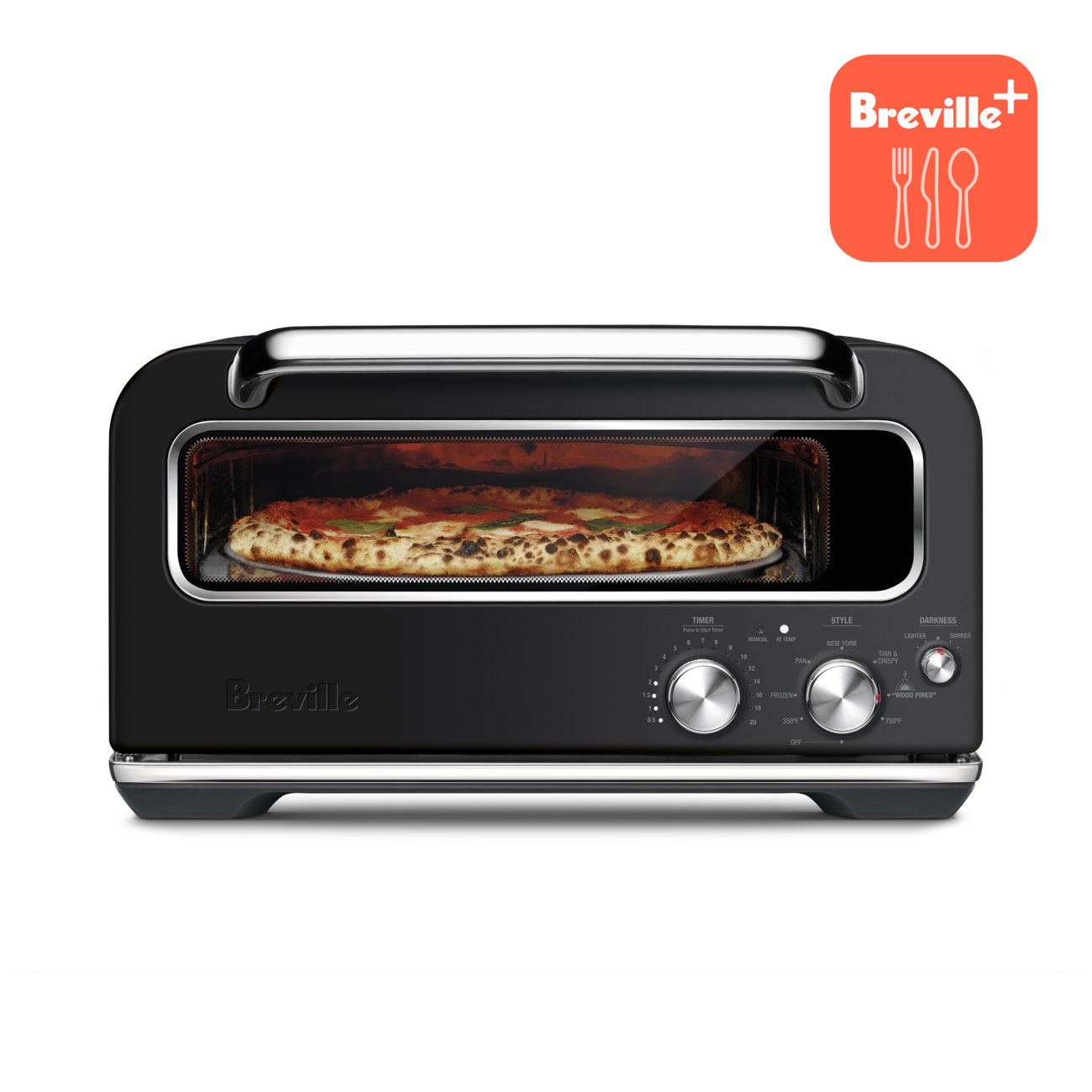
Explore this need in the finder →The Breville Smart Oven Pizzaiolo BPZ820 is for a cook who wants a countertop electric oven organized around pizza styles rather than a live gas or wood fire. Its strongest case is the combination of a 12-inch-class cooking space, five named pizza settings and a manual mode that separates the upper and deck heat. It is not an outdoor oven, and its “Wood Fired” control is a heat profile, not permission to burn wood.
That distinction matters before comparing it with an outdoor hybrid. Breville's U.S. instruction book says the “Wood Fired” setting uses no wood or wood by-product; it describes the heat behavior intended to imitate a wood-fired brick oven. The same manual describes the other pizza presets as Thin & Crispy, New York, Pan and Frozen. Separate 750°F and 350°F selections are not extra named pizza styles. If the requirement is actual solid-fuel cooking, look at a model such as the Gozney Dome Gen 2, not this electric appliance.
Measure the counter and the circuit first
Breville publishes a footprint of 18.1 by 18.5 by 10.6 inches and a weight of 33.07 pounds. Those are useful placement figures, but the weight is not a separately published ready-to-carry assembly measurement. The stone deck moves forward and down as the door opens, so allow room for the door, peel and a safe place to put a hot pan. The manual calls for a stable, level, heat-resistant surface and ventilation rather than a closed appliance nook. It gives a general 4-inch space recommendation around the oven and, in its first-use placement steps, at least 4 inches on both sides and 6 inches above. The larger overhead figure is the conservative number to use when checking a tight counter; it is not a statement that every direction requires six inches.
The U.S. rating is 120V, 60Hz and 1,800W. Breville recommends a dedicated circuit separated from other appliances, but the manual does not state a breaker amperage. Treat that as a circuit-planning issue, not a reason to derive a new electrical specification from the wattage. The manual also says this is for household indoor use, not outdoors or in a moving vehicle, and not to operate it in a small appliance enclosure.
Presets choose a heat balance, not a guaranteed bake time
On a named setting, Element iQ adjusts which elements run and how much power they receive. The manual shows why one generic “maximum temperature” line is not enough to explain the oven. In its table, the Neapolitan setting uses 700–750°F at both deck and top. Thin & Crispy, New York, Pan and Frozen use separate deck and top ranges. For example, Pan lists a much warmer deck than upper element; Frozen uses lower values at both. These are manufacturer settings, not my measurements of stone or food temperature.
Manual Mode gives an experienced user more direct control over deck and top temperatures and the distribution of heat across the upper elements. That is useful when adapting a recipe, but it is not a promise that every combination of dial positions is available: the manual says the two temperatures affect each other and limits possible combinations. The Darkness control on preset mode also shifts the oven's temperature to adjust browning. Neither control removes the need to watch a short cook.
Breville lists two-minute Neapolitan-style cooking as a headline, while the manual's time dial is adjustable and says preheating can take 10–20 minutes depending on the selected setting. It advises waiting until the AT TEMP light stops flashing before loading. The oven has no automatic turntable; the product page says the controlled radiant heat is designed to reduce the need to rotate a pizza. It still needs a person to launch and remove the pie, watch the toppings and judge when the dough is done.
The supplied pan changes the workflow
The manufacturer lists a pizza peel and pizza pan in the accessory package. The pan has a removable handle and is the required route for the Pan setting; take the handle off before closing the door. The manual says to use the peel when loading other pizzas. That distinction makes the Pizzaiolo more convenient if a household wants to alternate thin, New York, Neapolitan, frozen and pan pies without sourcing a compatible pan. The pan is carbon steel and must be seasoned before first use, with the oil quantity and sequence in the manual. It needs hand care, not a casual dishwasher cycle.
For direct-on-stone pizza, launching technique is part of the routine. The manual warns that damp toppings or dough left on the peel can stick, and too much loose flour or semolina can burn and smoke on the hot stone. It recommends assembling quickly and not leaving raw dough sitting on the peel. When baking several pizzas, it says to let the AT TEMP indicator return to its ready state before the next launch. That can make a dinner party more paced than the short first-pie headline suggests.
Cleaning and the honest alternative
Wait for the oven and accessories to cool before cleaning. Breville says the removable stone can be wiped with a damp sponge and should not be soaked or put in a dishwasher. The peel may be washed separately. The carbon-steel pan has its own seasoning and hand-wash instructions. At pizza temperatures, smoke is possible, so plan ventilation and supervision rather than assuming a countertop device will be odorless.
Choose the BPZ820 if named styles, manual top/deck adjustment and the included peel-and-pan kit are more useful than outdoor portability. Its official app ecosystem is described as recipes, cook guides and classes; the sources do not establish phone temperature monitoring, remote startup or remote adjustment, so those should not be treated as features. If proofing and broader lower-temperature baking are priorities, compare the Ooni Volt 2, which has a distinct proofing mode. If you want a simpler crust-thickness dial and a closed clamshell instead of five pizza-style presets, the Breville Crispy Crust BPZ600XL is the more relevant family comparison. Each still needs counter space and the right electrical outlet; none turns its own marketing timing into a universal recipe result.
Primary references: Breville U.S. BPZ820 product page and BPZ820 U.S. instruction book.
Key details at a glance
| Fuel versions | 120V / 1,800W U.S. electric appliance; not configured for propane, natural gas, wood, pellets or charcoal. |
|---|---|
| Maximum pizza on standard stationary floor | 12 in |
| 12-inch pizzas at once on standard floor | 1 |
| Published standard-oven weight | 33.07 lb |
| Temperature hub supplied with oven | No |
| Food probes supplied with oven | 0 |
| Motorized stone supplied in base package | No |
| Manufacturer maximum temperature | 750 °F |
| Monitoring and controls | Local dials and a flashing/ready AT TEMP light; no numeric live temperature display is documented. Breville+ is described as recipes, guides and classes; sources do not establish live monitoring, remote start or remote heat adjustment. |
| Optional rotating setup | The active deck moves forward/down with the door. No motorized turntable is included; Breville says controlled radiant heat is designed to remove the need for routine pizza rotation. |
| Space and measurement note | 18.1 W x 18.5 D x 10.6 H in; published weight 33.07 lb, not a distinct assembled carry weight. Manual placement says 4-inch general space around the appliance and, in first-use steps, 4 inches both sides and 6 inches above. Numeric clearance summarizes the largest directional value, not every face. |
| Stone care | After complete cooling, wipe the natural stone with a damp sponge; do not soak or put it in a dishwasher. The supplied carbon-steel pan has a seasoning process and hand care; the peel is cleaned separately. |
| Cooking modes and limits | Five named pizza settings: “Wood Fired” (manual explicitly says it uses no wood or wood by-product), Thin & Crispy, New York, Pan and Frozen; plus separate 750°F and 350°F selections. Preset ranges differ by deck and top zone. Manual Mode sets those zones independently but says their temperatures interact and available combinations are limited. Preheat can take 10–20 minutes. |
| Boost routine | No separate top-element or stone-recovery Boost is listed; the Darkness control adjusts heat for browning. |
| US voltage | 120 V |
| Electrical input | 1800 W |
| Dedicated dough-proofing mode | No |
| Built-in cooking modes | 7 |
Use the exact model’s instructions for operating limits, supplied equipment and version differences.
Sources for this assessment
Find a setup for your pizza night.
Choose your fuel, pizza diameter and serving layout, then add turning and monitoring requirements.