
On this page
Your needs, this model
Does it fit your priorities?
Can the Lil Luigi use its own charcoal firebox outdoors without a separate grill or gas burner?
Yes. WPPO describes the oven as a standalone portable firebox cooker and the shared manual lists charcoal. Use the documented outdoor clearances and turn the pizza by hand.
Explore this need in the finder →Can it be shortlisted for outdoor cooking if I do not make exact pie diameter or assembled weight a hard requirement?
Yes, for a general outdoor wood-fired routine. The exact page gives outside dimensions but no maximum pizza diameter or weight; either unknown fails if you enter it as an essential numeric limit.
Explore this need in the finder →Does the exact setup meet a 12 ft clearance and local-temperature reading requirement?
Yes. The shared manual gives 12 ft to combustibles in all directions, and the Lil Luigi page lists a temperature thermometer. A 10 ft site or phone-monitoring requirement is not supported.
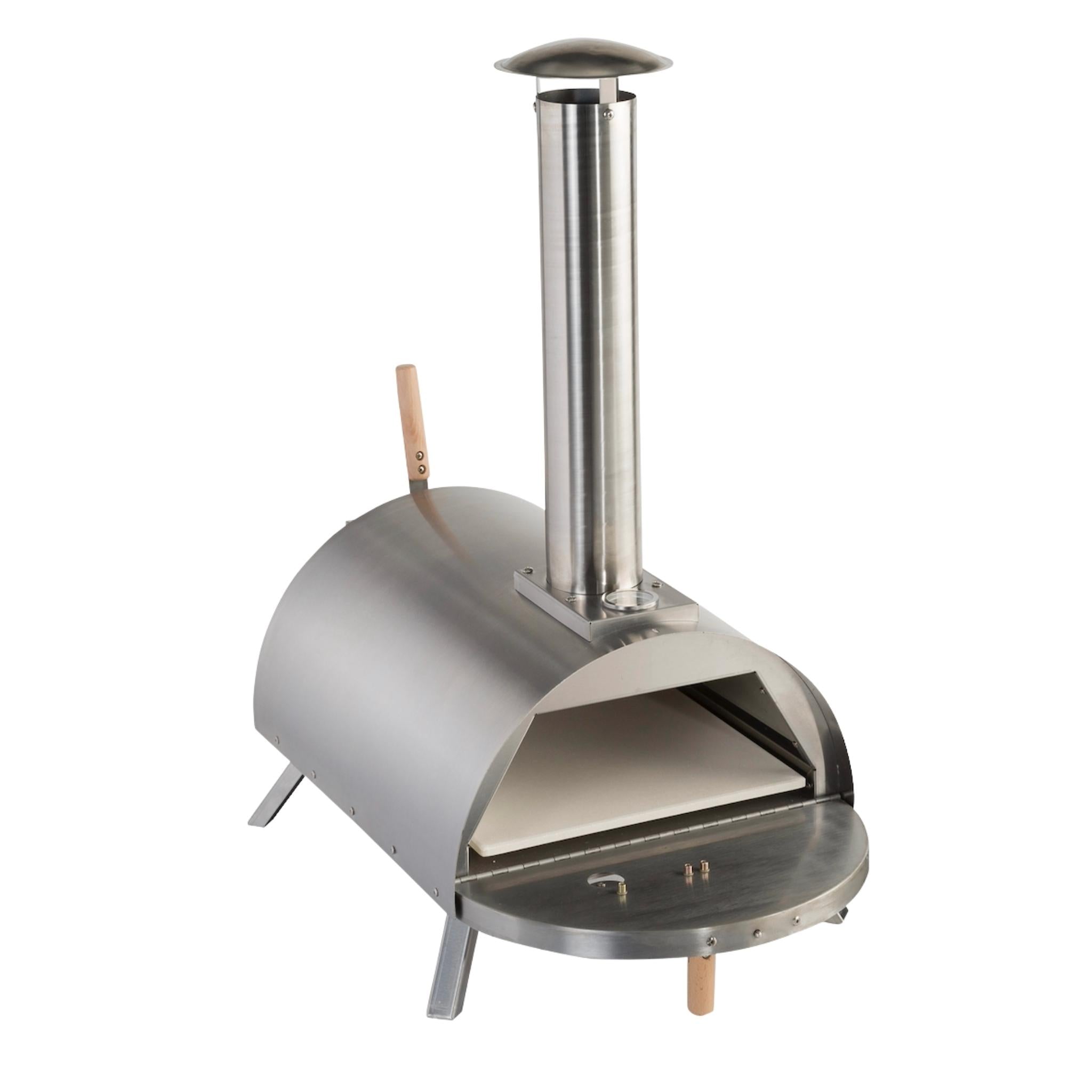
Explore this need in the finder →WPPO’s Lil Luigi is a portable outdoor wood-fired oven whose listing names the exact WKP-01 configuration. Its product page gives 31.5-by-16-by-33-inch exterior dimensions, 430 stainless steel inside and out, and an 11 mm cordierite stone. It is the more fully itemized kit in WPPO’s compact Le Peppe/Lil Luigi pair: WPPO lists a cover/carry bag, a peel, a poker and a pizza cutter. That is a useful start-up package, but the page does not list a separate pizza-turning tool, and it does not publish the oven’s weight or maximum pizza diameter.
Portability is useful, but the bag is not a weight rating
The Lil Luigi has folding legs, a removable chimney stack, a hinged door, a sight window and a temperature thermometer. The included cover can be used as a carry bag, which makes this model easier to pack away than a cart-mounted backyard oven. Still, no assembled mass is stated. A bag and compact-looking shell do not establish that one person can comfortably carry it, especially once it is hot or has been used. The manual says to allow the oven to cool below 85°F before moving or storing it.
Its listed 31.5-by-16-by-33-inch dimensions are outer measurements. WPPO does not specify the interior opening or stone diameter on the product page, so the exact maximum pizza size remains unconfirmed. If a 12-inch pizza, a large peel, a cabinet, or a weight ceiling must fit exactly, ask the maker for the relevant measurement rather than inferring it from the exterior or photograph.
Three solid fuels, with a live fire to manage
The easy-load firebox is designed for dry hardwood pieces, wood pellets or charcoal. WPPO’s product text also mentions wood chips; its shared user manual is more restrictive, emphasizing dry solid fuels that fit the hopper and rejecting damp wood, pine, treated or laminated lumber, coal and liquid fire starters. Follow the manual’s fuel instructions rather than treating every kind of wood product as interchangeable. There is no gas burner, electric element or separate grill required for this base oven, but the cook must supply suitable fuel and manage a live fire.
The manual says to build heat gradually, aim for a cooking-floor temperature in the approximate 500–650°F range, and keep the oven below its 900°F maximum. These are fire-managed conditions, not a thermostat’s user-selectable setpoints. The product page lists a thermometer, and the manual tells the cook to monitor the oven’s temperature gauge, so a local reading is part of the documented setup. It does not provide phone temperature monitoring or remote flame control.
Outdoor clearances and hand turning are part of the deal
The shared manual limits the Lil Luigi to outdoor cooking and calls for at least 12 feet of clearance from combustible material in all directions. It specifically includes walls, ceilings, awnings, canopies and foliage among the things to account for. That clearance can rule out a narrow patio or a sheltered spot under a wooden roof. The manual also warns against moving or storing the oven before it cools and recommends a fire extinguisher close by while it is in use.
Pizza cooking is not automated: the instructions say to remove the door, place the pie on the deck, and use a peel to rotate it frequently. The hinged door and peephole make access and checking easier, but they do not replace turning. If powered rotation is essential, or if you need a controlled temperature preset, shortlist a different design.
What Lil Luigi changes versus Le Peppe
WPPO provides one manual for both ovens and says their use, care and maintenance are identical; the stated differences are exterior material and the hinged-door arrangement. The Lil Luigi’s page explicitly calls out 430 stainless steel inside and out, its hinged access door and the cover/carry bag plus peel, poker and cutter. The Le Peppe page describes a double-walled steel shell and offers black and red finishes, but does not itemize the same bundle in its current description. The two are therefore close in fire routine and published outer dimensions, not interchangeable package claims. A pizza cutter should not be counted as a turning tool, and the Lil Luigi page does not confirm both a peel and separate turner as a bundle.
How its answers change the shortlist
Lil Luigi is a plausible match for outdoor wood, pellet or charcoal cooking when you accept hand turning, can provide the manual’s clearance and do not need a hard minimum pizza diameter or verified assembled weight. It should fail a required 12-inch capacity or maximum-weight filter until those measurements are supplied, because neither is published for this exact SKU. It should also fall out for indoor use, propane or natural gas, phone monitoring, powered rotation, selectable-temperature requirements, or a requirement that both a peel and separate turner be confirmed in the package. Its local thermometer and named accessories are useful, but they do not fill those gaps.
Choose the Lil Luigi when the stainless construction, hinged door and explicitly listed carry/tool package make the compact wood-fired routine more appealing than the simpler Le Peppe presentation. It is not the choice for a small clearance envelope, a known pie-size target, a strict lifting limit or a low-attention cook. For more repeatable fuel control, compare a gas-fired oven; for indoor operation, use a model whose manufacturer explicitly approves it.
Key details at a glance
| Fuel versions | The product pages mention wood chunks, chips, pellets and charcoal. The shared current manufacturer manual gives a narrower operating list: dry medium/hardwood pieces, pellets or charcoal that fit the hopper; it rejects damp wood, pine, treated/laminated wood, coal and liquid starters. Use the manual’s conservative list. |
|---|---|
| Motorized stone supplied in base package | No |
| Standard cordierite thickness | 11 mm |
| Manufacturer maximum temperature | 900 °F |
| Optional rotating setup | The shared manual directs the cook to rotate pizzas frequently using a peel; no powered turner is included or documented. |
| Dedicated dough-proofing mode | No |
Use the exact model’s instructions for operating limits, supplied equipment and version differences.
Sources for this assessment

Find a setup for your pizza night.
Choose your fuel, pizza diameter and serving layout, then add turning and monitoring requirements.