
On this page
Your needs, this model
Does it fit your priorities?
Can the Infinity 66 support a standalone outdoor propane plan on a suitable solid platform?
Yes. The exact listing identifies the Hybrid 66 oven and burner-protection cap; the shared manual describes LPG operation, an outdoor-only location and a minimum platform depth. Use a gas supplier for connection and confirm the regulator/hose package.
Explore this need in the finder →Does the “three pizzas at once” page claim prove three 10-inch pizzas will fit?
No. WPPO states three pizzas without specifying their diameters or a layout, and the family manual’s 30-inch inner diameter is not an individual-pie size or simultaneous layout. An essential three-pie diameter requirement remains unknown.
Explore this need in the finder →Can the owner rely on a single documented numeric combustible clearance for installation?
Not from the captured manual. One page gives 12 inches from flammable or meltable material; another says keep such material outside five meters. Until WPPO clarifies which applies, a hard numeric clearance requirement cannot be confirmed.
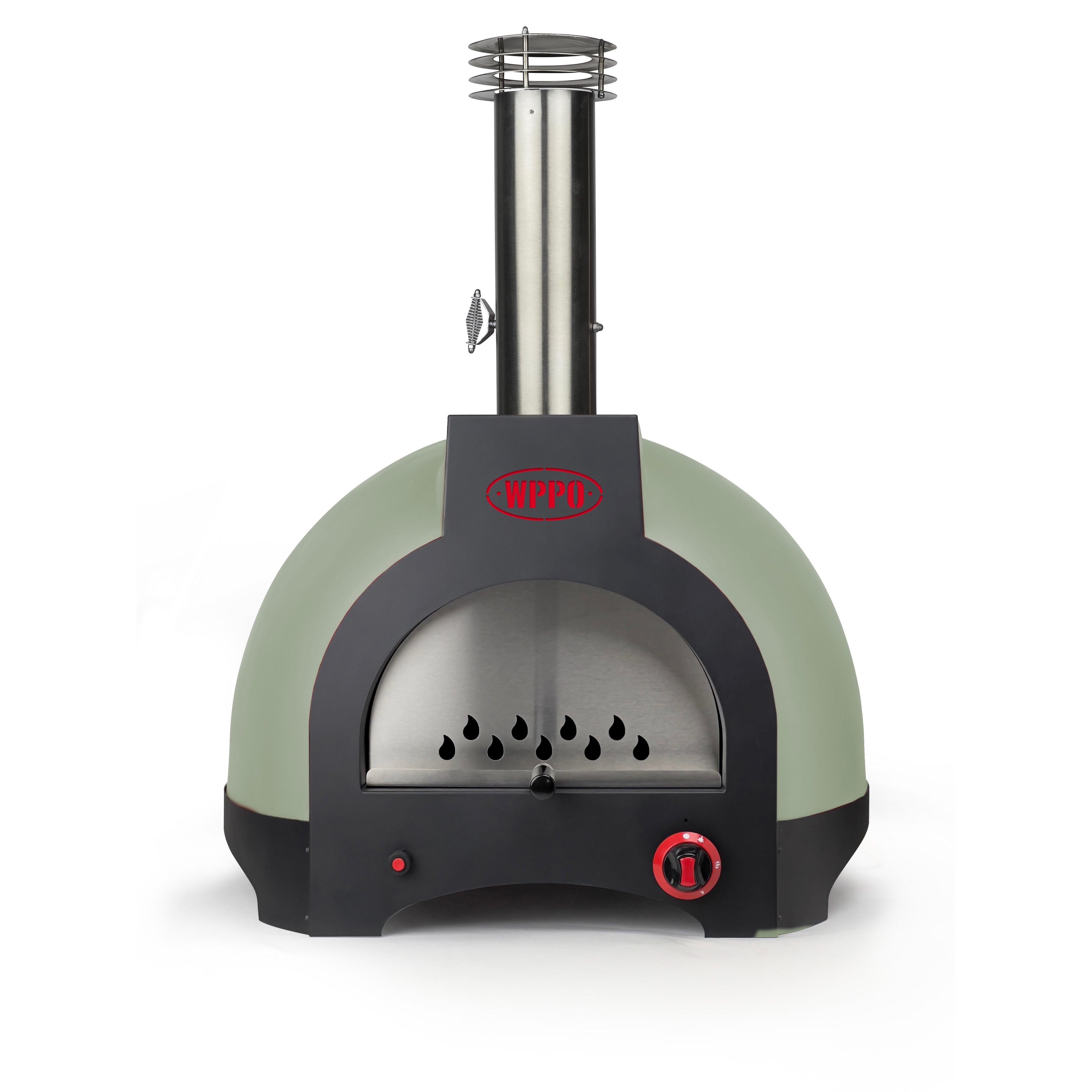
Explore this need in the finder →The WPPO Infinity 66 is a heavy outdoor hybrid oven with an LP burner, a refractory cooking chamber, and an alternative wood-fire method. Its product page calls it a three-pizza oven and lists four exact U.S. finish SKUs, including Olive Green WKI66-OG. The documentation supports choosing between gas and wood; it does not settle every headline claim, so this is best for a buyer who can plan a large, fixed outdoor station and will verify the safety and package details first.
Capacity claims are not a pie-size chart
WPPO’s Infinity 66 listing says it can cook three pizzas at once, but it does not specify the diameter of those pies. The family manual gives the Hybrid 66 an inner diameter of 30 inches, a 210-pound oven weight, and a separate 50-pound wheeled stand. A chamber measurement is not a maximum pizza diameter or a three-pie layout; the product label “66” is not a pie measurement either. If you need three 10-inch or three 12-inch pizzas, request a model-specific usable-floor diagram and a written simultaneous-size answer before treating that as a requirement the oven meets.
The manual suggests an outdoor platform at least 35.5 inches deep for the Hybrid 66, around 35.5 inches high, with two inches of air space around the oven and three feet of movement room at the front. It says a solid, level surface is needed. The wheel stand is a separate accessory in the manual, not something to assume is included with the listed oven. For a countertop arrangement, support the oven’s 210-pound weight; with the separate 50-pound stand, the oven-and-stand component total is 260 pounds before fuel or other items. That arithmetic is useful for planning but is not a published assembled-system rating for a buyer’s counter.
Use gas and wood as separate, attended routines
The exact page promotes gas, wood, and “gas + wood.” The linked WPPO Hybrid manual is internally inconsistent: one section describes three methods, but its safety page explicitly says not to cook with gas and wood at the same time; later pages describe adding aromatic wood while gas is running. For a conservative buying decision, count propane and wood as separate modes only. Ask WPPO for current written instructions before attempting the combined method. The manual describes domestic LPG, a gas-supplier connection, a 30–60-inch hose, a burner safety valve, and chimney-damper adjustment. Natural gas is not established by the exact listing or this manual.
The page’s “up to 1300°C” claim should not be treated as an operating target. The manual says to heat the deck gradually, cook around 750–850°F, and avoid overheating above 950°F. Those are manual-guided cooking temperatures, not a thermostat range. The manual also tells the user to operate outside, never indoors, and to keep flammable or explosive material clear. Its siting language is not consistent: one passage gives 12 inches from flammable or meltable materials, while another says not to keep such materials within five meters. Until WPPO clarifies which dimensions govern the exact installation, do not rely on a single numeric clearance field or place it near a wall, roof, foliage, or other combustible structure.
The image, finish, and hardware need exact confirmation
The Olive Green image registered here is linked to the WKI66-OG variant on WPPO’s product page and shows the olive-green body. WPPO does not label the asset as a photograph or render. The preserved U.S. row has four color variants—Ruby Red, Olive Green, Faro Yellow, and Marine Blue—even though the page copy mentions seven UV-resistant colors. Do not treat that broader marketing sentence as evidence for three additional U.S. SKUs. Verify the exact finish and stand availability with the seller.
The manual describes a monoblock refractory dome and cooking plate, burner-protection cap, damper, and safety valve. It says the oven can be used on an outdoor kitchen counter or with a separately sold wheeled stand. The online listing names the oven and burner cap, not the stand. Confirm whether an LP regulator/hose, cover, or other setup parts are in your exact order; a product page that identifies the burner does not prove every gas connection component is supplied.
Who is it for?
Shortlist the Infinity 66 if you want a large hybrid station, have a suitable outdoor base and utilities, and are content with manual heat management rather than a selectable temperature. It is not a light portable oven: the oven alone is listed at 210 pounds, and the optional stand adds weight. It is a poor fit for indoor use, constrained overhead space, an unverified three-pie diameter requirement, a natural-gas-only line, or an installation whose safe clearance depends on the conflicting manual distances.
For a smaller outdoor footprint, compare the WPPO Karma and Lava models, but check their exact pizza-size evidence rather than comparing only model numbers. For a firm three-pie serving requirement, do not rely on the Infinity’s page headline alone; obtain the maker’s layout and sizes. The useful difference is a documented outdoor LPG/wood choice in a substantial refractory oven, balanced by significant installation mass, unresolved clearance wording, and a capacity claim without pie dimensions. Those limits are central to choosing it, not fine print to discover after delivery.
Key details at a glance
| Fuel versions | Exact U.S. native row has four finish SKUs. Page advertises gas or wood; family manual specifies domestic LPG. Natural-gas operation is not established. |
|---|---|
| Published standard-oven weight | 210 lb |
| Manufacturer maximum temperature | 950 °F |
| Optional rotating setup | No motorized turner is stated for this exact SKU; the family manual focuses on manual cooking. Exact rotation claim is not required by the current plans and remains unknown. |
Use the exact model’s instructions for operating limits, supplied equipment and version differences.
Sources for this assessment

Find a setup for your pizza night.
Choose your fuel, pizza diameter and serving layout, then add turning and monitoring requirements.