
Your needs, this model
Does it fit your priorities?
Can the exact kit fit an outdoor, hand-tended wood-fire plan with full manual clearance?
The exact identity supports the outdoor wood-fired DIY use with buyer-completed installation. It does not document the rejected essential size, selectable setpoint or complete ready-to-cook/no-additional-purchase conditions.
Explore this need in the finder →Does exact product evidence establish a 12-inch pizza fit?
The exact identity supports the outdoor wood-fired DIY use with buyer-completed installation. It does not document the rejected essential size, selectable setpoint or complete ready-to-cook/no-additional-purchase conditions.
Explore this need in the finder →Can the wood fire select and hold a 650°F cooking setpoint?
The exact identity supports the outdoor wood-fired DIY use with buyer-completed installation. It does not document the rejected essential size, selectable setpoint or complete ready-to-cook/no-additional-purchase conditions.
Explore this need in the finder →Can the buyer require a ready-to-cook oven with no additional functional purchase or installation supply?
The exact identity supports the outdoor wood-fired DIY use with buyer-completed installation. It does not document the rejected essential size, selectable setpoint or complete ready-to-cook/no-additional-purchase conditions.
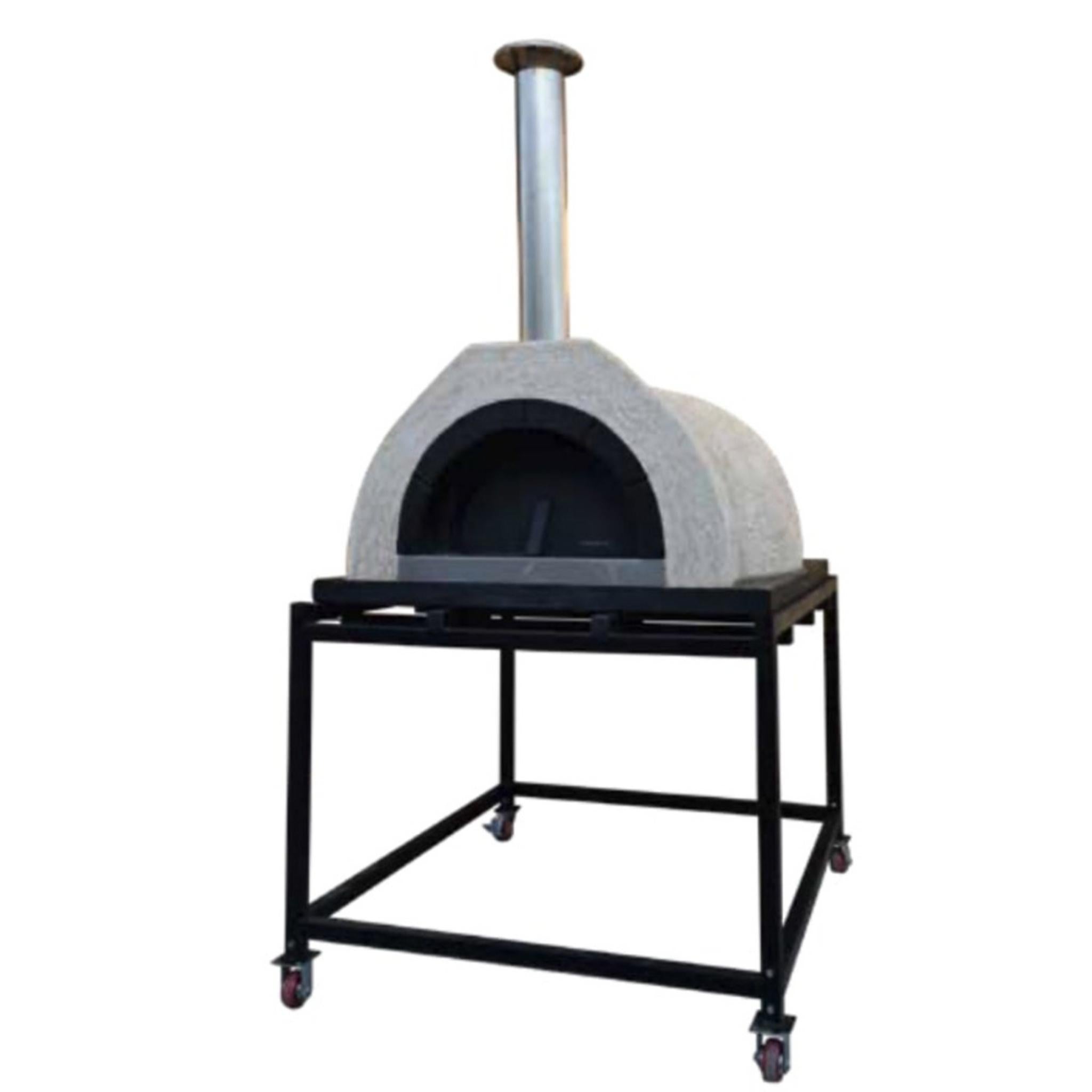
Explore this need in the finder →WPPO’s Tuscany DIY Kit 100 is a substantial wood-fired build kit with an exact U.S. native SKU of WDIY-AD100. The current product page names it as a 55-inch-deep by 52-wide by 31-high oven and describes a firebrick cooling deck, thermal insulation, refractory-cement construction, a stainless flue and a black door. It is not a ready-to-use countertop cooker: the page calls the product a DIY kit, says the exterior finish is not included and describes approximately five hours of assembly.
Verify the footprint before designing the base
For a large permanent oven, one inch can matter when the support is already built. The current exact product page repeats 55×52×31 inches. A separate WPPO family comparison graphic inspected from another Tuscany DIY product-page image labels AD100 as 55 inches long, 51 wide and 31 high. Both sources associate the figure set with the AD100 family, but they do not agree on width. Use the current exact SKU page as the starting point, not as a finished construction drawing; confirm the final footprint with WPPO or the installer before cutting a counter or ordering a surround. The family graphic also contains an AD100 DIY-weight value, but the captured current page does not publish a shipping or completed-system weight, so we do not use that chart value as a verified load for your support.
Pizza capacity is another separate unknown. “100” is part of the product name, not a published 100-inch pizza diameter. The exact current page does not specify the interior hearth, opening width, maximum pie size or simultaneous layout. The AD100 row in a comparison graphic shows interior dimensions, but that graphic is a family illustration rather than a current SKU-specific installation plan; it does not establish the practical pizza fit around a live fire. Ask for the current exact hearth and opening drawing if a 12-inch or larger pie is an essential requirement.
Budget for the site work, not just assembly
The DIY manual requires a dry, clean and level concrete slab at the top of a prepared base. Its “not included” section lists tools and protective gear plus fire-rated mortar or render; the product page separately lists cement while also saying all components are included except the finish. That is a real package-detail ambiguity, not an invitation to guess that the required rendered finish or support is in the carton. Ask WPPO to confirm the precise supplies and the base design for the WDIY-AD100. The manual says the chamber pieces are heavy enough that help is required during positioning. Weight of the exact finished setup remains unverified here.
The manufacturer’s assembly estimate is roughly five hours, but the complete schedule also depends on base readiness, finishing, drying and curing. The DIY manual says to keep moisture out before the final render, let the structure dry naturally, then cure it gradually with small fires. It notes that some hairline cracking can occur during heat-up and settling. That project sequence makes this a better fit for an owner who wants a built-in appearance and has time for masonry work than for someone who expects to open a box and serve dinner the same evening.
Fuel, heat and safety are manual decisions
The DIY manual designates the oven for outdoor use only and requires at least 12 feet from combustible material in every direction, including overhead construction. It describes dry solid medium- or hardwood split to about 12–16 inches long and 2–5 inches in diameter, and rejects damp or treated lumber and other unsuitable fuels. You manage a real wood fire rather than selecting a preset. The manual describes a gradual heat-up, recommends a deck temperature around 500–650°F and sets a 900°F maximum; it does not turn those numbers into an electronic target range or thermostat. Expect to watch the fire, move coals as needed and turn pies by hand. There is no documented powered rotation or phone control in this exact kit listing.
Before placing it near an outdoor kitchen, map the clearance and flue path, protect the unfinished structure from rain and check local building rules. The full support must be designed for the installed oven and its materials; the source captures do not provide a verified completed weight. Treat the manual’s safety instructions as the operating baseline, and have a qualified installer review the base and surrounding combustible construction.
Who should choose the Kit 100?
Shortlist the AD100 if the fixed outdoor project and its roughly 55-by-52-inch page footprint make sense for your site, and you are willing to source and verify the finish, support and installation materials. It is a different scale of commitment from the AD70 and ADFUN listings, not a promise of a particular pizza count. The larger AD120 page has an even larger 71-inch-deep stated envelope, with its own source conflict on width and height. If your priority is exact pizza size, base loading or a fully finished turnkey unit, request those exact drawings and written package details before comparing the models as if their model numbers alone settled the question.
Source links: WPPO Tuscany Kit 100 product page and WPPO DIY User Manual.
Key details at a glance
| Fuel versions | The exact U.S. row identifies a wood-fired DIY oven. The official WPPO DIY family manual recommends dry solid medium- or hardwood split roughly 12–16 inches long and 2–5 inches in diameter, and rejects damp, treated, sappy, laminated or chipped wood, coal and plywood. |
|---|---|
| Temperature hub supplied with oven | No |
| Food probes supplied with oven | 0 |
| Motorized stone supplied in base package | No |
| Manufacturer maximum temperature | 900 °F |
| Optional rotating setup | The exact pages and shared manual describe a manually tended wood fire and do not document a powered turning mechanism. Plan to turn pies by hand; no powered turner is listed for this native SKU. |
| Stone care | Keep the chamber dry until it is finished/sealed; allow natural drying before gradual curing fires. Use only suitable dry solid wood, avoid treated or damp fuel and liquid firelighter, never close the door over a live fire, keep an appropriate extinguisher nearby and observe the full 12-ft outdoor clearance. |
| Cooking modes and limits | Outdoor manual wood-fire operation; no digital temperature setting, named presets or saved settings are listed for this exact product. |
| Saved custom settings | 0 |
| Dedicated dough-proofing mode | No |
Use the exact model’s instructions for operating limits, supplied equipment and version differences.
Sources for this assessment

Find a setup for your pizza night.
Choose your fuel, pizza diameter and serving layout, then add turning and monitoring requirements.