
Your needs, this model
Does it fit your priorities?
Can the exact kit fit an outdoor, hand-tended wood-fire plan with full manual clearance?
The exact identity supports the outdoor wood-fired DIY use with buyer-completed installation. It does not document the rejected essential size, selectable setpoint or complete ready-to-cook/no-additional-purchase conditions.
Explore this need in the finder →Does exact product evidence establish a 12-inch pizza fit?
The exact identity supports the outdoor wood-fired DIY use with buyer-completed installation. It does not document the rejected essential size, selectable setpoint or complete ready-to-cook/no-additional-purchase conditions.
Explore this need in the finder →Can the wood fire select and hold a 650°F cooking setpoint?
The exact identity supports the outdoor wood-fired DIY use with buyer-completed installation. It does not document the rejected essential size, selectable setpoint or complete ready-to-cook/no-additional-purchase conditions.
Explore this need in the finder →Can the buyer require a ready-to-cook oven with no additional functional purchase or installation supply?
The exact identity supports the outdoor wood-fired DIY use with buyer-completed installation. It does not document the rejected essential size, selectable setpoint or complete ready-to-cook/no-additional-purchase conditions.
Explore this need in the finder →The WPPO DIY AD120 is a large, fixed wood-fired oven project rather than a portable backyard appliance. Its exact native variant is the single-SKU WDIY-AD120. WPPO’s current product page names dimensions of 71 inches deep by 60 wide by 32 high, and its title identifies a stainless-steel flue and black door. The page’s feature copy is brief, so it does not settle every package detail; the family DIY manual is the important companion for understanding the construction and site requirements.
Leave room for the complete installation
At 71 inches deep, this is the largest exterior footprint among the four WPPO DIY configurations covered here. Do not plan a counter or surround around the 71×60×32 listing without checking the original drawing: an official WPPO family comparison graphic on another Tuscany DIY product-page image shows AD120 as 71 inches long by 59 wide by 31½ high. The depth agrees, but the width and height do not. The exact current product page should guide the initial layout, while the mismatch means a tight-fit installation still needs a current drawing or written confirmation from WPPO. Neither source is a guarantee of the finished chimney height or clearance around the installed assembly.
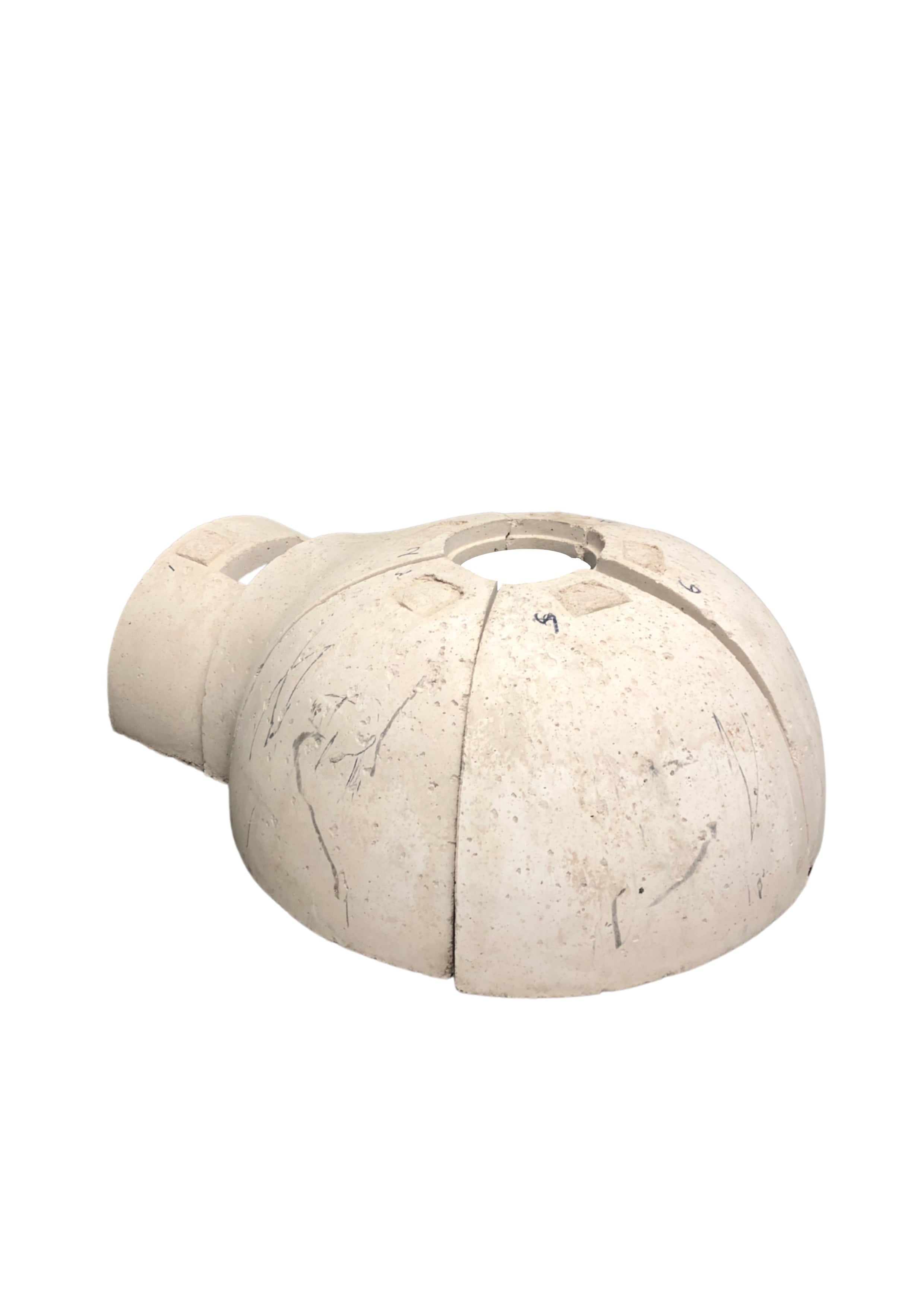
The image used here is WPPO’s product-row image for the AD120 page. It shows a refractory oven chamber before the full installation, not a completed backyard oven or a complete package layout. That is a useful distinction for a DIY product: the image should not be read as proof of a supplied stand, finished exterior, total weight or ready-to-cook assembly. The page itself does not publish the completed setup weight, a shipping weight, a maximum pizza diameter or a simultaneous pizza count. Have the installer confirm the structural load and the exact chamber and opening dimensions before you build a foundation or promise yourself a particular pie size.
Construction is part of the purchase
WPPO calls the AD120 a DIY kit. The shared DIY manual requires the oven to sit on a dry, level concrete slab at the top of a suitable base. It gives the builder a sequence for the floor insulation and tiles, refractory chamber, bonding, insulation wrap, protective layers, flue and rendered finish. The manual’s “not included” section lists protective footwear, glasses, a dust mask, gloves, tools and fire-rated mortar or render. The exact AD120 product page is more limited than the pages for the smaller AD70 and numbered Kit 100; its generic customization language is not a complete line-item package list. Do not assume a pictured support, final finish, tools or every masonry material is included. Get the exact AD120 contents and base drawing in writing.
The manual describes the chamber pieces as heavy and says assistance is needed when lifting them. A large oven will also need a stable, accessible construction site and protection from water during installation. WPPO warns that moisture entering the unfinished chamber can slow heat-up and harm efficiency. After the exterior is sealed, the manual recommends natural drying followed by small, gradually increased curing fires. Some minor hairline cracks can arise as the structure settles under heat; follow the manual’s inspection and repair advice rather than treating all cracks the same.
Wood-fired use is outdoor and hands-on
The manual says this oven family is for outdoor use only and requires at least 12 feet from combustible materials in every direction, including walls, foliage, awnings, ceilings and other overhead construction. It specifies dry solid medium- or hardwood, split roughly 12–16 inches long and 2–5 inches across. Damp, treated, sappy, laminated or chipped wood is not acceptable. The fire is tended manually; the manual recommends a gradual heat-up, an oven deck around 500–650°F for cooking and a 900°F maximum. Those are instructions for live-fire operation, not a selectable temperature control or proof that the AD120 can hold a chosen target. Plan to monitor the fire and turn pies by hand. Do not use the oven indoors or as a space heater, and keep an extinguisher close by.
Is the AD120 the right scale?
The AD120 is a sensible candidate only for someone who wants a large masonry-style outdoor centerpiece, has room for its deep footprint and can prepare the base, finish and construction site. Its size may help a host plan a larger oven, but the manufacturer has not given this exact listing a maximum pizza diameter or count, so it cannot be selected on that assumption. The 55×52×31 Kit 100 page is a smaller stated envelope, while the AD70 is much more compact; all still require a build, finish and safe outdoor placement. If you need a measured pizza fit, completed weight, a confirmed included support or exact clearance drawing, ask WPPO or the installer before committing. If those requirements are essential and remain unanswered, a preassembled model with published measurements is the more responsible alternative.
Source links: WPPO AD120 product page and WPPO DIY User Manual.
Key details at a glance
| Fuel versions | The exact U.S. row identifies a wood-fired DIY oven. The official WPPO DIY family manual recommends dry solid medium- or hardwood split roughly 12–16 inches long and 2–5 inches in diameter, and rejects damp, treated, sappy, laminated or chipped wood, coal and plywood. |
|---|---|
| Temperature hub supplied with oven | No |
| Food probes supplied with oven | 0 |
| Motorized stone supplied in base package | No |
| Manufacturer maximum temperature | 900 °F |
| Optional rotating setup | The exact pages and shared manual describe a manually tended wood fire and do not document a powered turning mechanism. Plan to turn pies by hand; no powered turner is listed for this native SKU. |
| Stone care | Keep the chamber dry until it is finished/sealed; allow natural drying before gradual curing fires. Use only suitable dry solid wood, avoid treated or damp fuel and liquid firelighter, never close the door over a live fire, keep an appropriate extinguisher nearby and observe the full 12-ft outdoor clearance. |
| Cooking modes and limits | Outdoor manual wood-fire operation; no digital temperature setting, named presets or saved settings are listed for this exact product. |
| Saved custom settings | 0 |
| Dedicated dough-proofing mode | No |
Use the exact model’s instructions for operating limits, supplied equipment and version differences.
Sources for this assessment

Find a setup for your pizza night.
Choose your fuel, pizza diameter and serving layout, then add turning and monitoring requirements.