
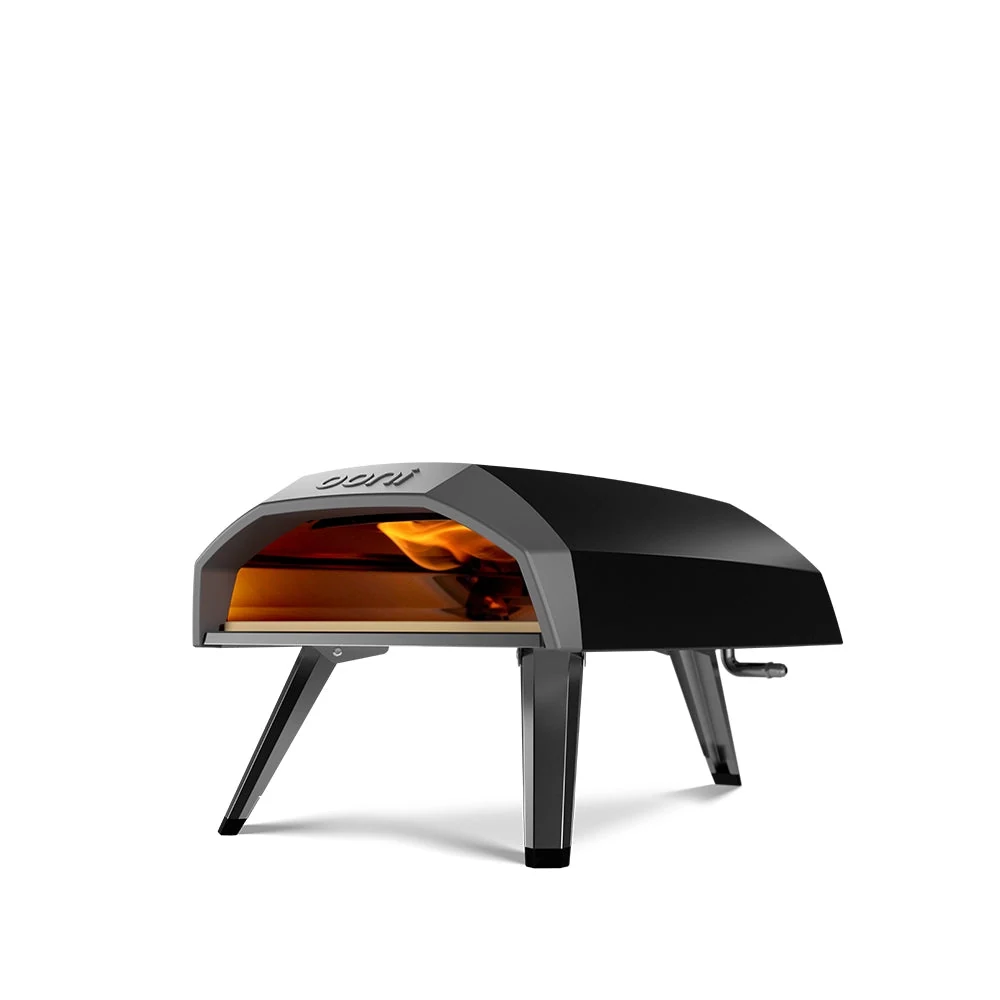
Your needs, this model
Does it fit your priorities?
Can I cook a 12-inch propane pizza outdoors with a light, supplied-equipment setup?
Yes. The first-generation US Koda 12 supports a 12-inch pizza on its supplied stationary stone; its higher published mass claim is 20.4 lb. It is outdoor-only and requires manual turning.
Explore this need in the finder →Does the first-generation Koda 12 meet a required 13-inch pizza size?
No. The documented stationary-stone limit is 12 inches; use a larger oven such as the Koda 16 or compare a newer 14-inch Koda 2 instead.
Explore this need in the finder →Can this propane Koda 12 be used indoors?
No. The North American manual says outdoor use only and excludes enclosed areas. Its compact size does not make a garage, enclosed balcony or indoor kitchen an approved location.
Explore this need in the finder →The first-generation Ooni Koda 12 is a compact outdoor propane oven for one 12-inch pizza. It is the lighter original Koda, but not a fit for larger pies, simultaneous baking or indoor use. Ooni lists it separately from the newer 14-inch Koda 2; check the generation when comparing units.
A compact one-pizza station
The exact US native-catalogue variant is Koda 12, SKU UU-P06A00. Ooni lists the oven, stone and hose; its North American manual rates the burner at 13,300 BTU per hour and illustrates the propane-cylinder setup. “Gas” does not mean natural gas for this row. The spec table reports 20.2 pounds, while portability copy says 20.4; the matching plan uses the higher figure.
The 12-inch stone holds one pizza, which you turn by hand to manage the open-flame side. Ooni advertises a 950°F maximum in 15 minutes and a 60-second Neapolitan-style bake; these are manufacturer claims, not measured backyard results. Wind, fuel, toppings and stone recovery change the pace, and the oven must not be left unattended.
At the dial, ignition and manual flame adjustment are the controls: the base package has no display, hub, food probe, separate burner zones or powered turner. Its cordierite stone is 10 mm, versus 15 mm on Koda 16 and Koda 2. The Koda 12 suits cooks who value easy carrying and occasional outdoor pizza over larger format or monitoring.
Outdoor propane means a real site plan
The manual requires outdoor use only—not a garage, enclosed space, boat or recreational vehicle. It gives 24 inches at the sides and 36 behind, then a broader warning to stay 10 feet from a structure or combustible material and avoid unprotected overhead construction. Those are not one footprint number. Follow the full North American instructions and local rules; “small” does not make a balcony or covered nook safe. Use a level, stable, non-combustible support. Manual text says to keep a 20-pound cylinder 25 inches away, while its diagram shows 24; use the larger figure and confirm the current instructions.
Before lighting, inspect the hose and fittings and leak-test with soapy water, never a flame. Route the hose away from hot metal, keep the cylinder upright and outdoors, and shut it off after cooking. Avoid extreme wind and never move the oven hot or leave it unattended. These are important parts of owning a portable gas oven, not optional extras.
Stone care and what the listing does not answer
The fragile stone stays hot long after the flame goes out. Do not cool it with water, put frozen food on a hot surface or move the appliance before it cools. The manual suggests turning the stone over to burn off food; keep it dry and protect the oven from harsh weather during long storage.
Do not use the listed 24.4 × 15.5 × 11.7-inch sequence as a fitted footprint: the product table repeats “Width” for its third measurement. Nor does the page establish that a motorized accessory fits this model. Ooni describes its rotating stone for the Koda 2 range, not as an upgrade here; hand turning is the supported plan.
How the questionnaire changes the fit
Select outdoors, propane, a pizza of 12 inches or less and hand turning; include earlier models to see it. Indoor use, a natural-gas line, larger pies, phone monitoring or powered rotation should remove it. The conservative weight match uses 20.4 pounds. A single clearance number is left unknown because the manual's warnings specify different directions and distances.
For 14-inch pies and newer hardware, compare Koda 2; for a 16-inch pie and more turning room, compare Koda 16, whose weight claims also conflict. If you prefer wood or charcoal, Karu 2 is a different 12-inch oven, though its propane burner costs extra. Koda 12 is for outdoor cooks content with one compact pie, manual turning and careful siting.
Key details at a glance
| Fuel versions | Observed US base SKU UU-P06A00 and North American manual identify the propane-tank setup. Natural-gas compatibility is not assumed. |
|---|---|
| Maximum pizza on standard stationary floor | 12 in |
| 12-inch pizzas at once on standard floor | 1 |
| Published standard-oven weight | 20.2 lb |
| Temperature hub supplied with oven | No |
| Food probes supplied with oven | 0 |
| Motorized stone supplied in base package | No |
| Standard cordierite thickness | 10 mm |
| Manufacturer maximum temperature | 950 °F |
| Monitoring and controls | One manual control; no supplied temperature display, phone hub or food probe. |
| Optional rotating setup | Stationary stone; manually turn a pizza. A supported first-generation motorized rotating setup was not verified. |
| Space and measurement note | The Koda 12 product specification repeats Width for the third unboxed dimension, and the manufacturer publishes both 20.2 lb (table) and 20.4 lb (copy). Do not use these as a fitted footprint or a sub-20.4 lb guarantee. |
| Stone care | The North American manual says not to cool hot cordierite with water, place frozen food on a hot stone, or move the oven before it is fully cool; keep the stone dry and protected during storage. |
| Cooking modes and limits | Ooni claims up to 950°F in 15 minutes and a 60-second Neapolitan-style bake; these are manufacturer claims, not independent measurements. |
| Saved custom settings | 0 |
| Dedicated dough-proofing mode | No |
Use the exact model’s instructions for operating limits, supplied equipment and version differences.
Sources for this assessment

Find a setup for your pizza night.
Choose your fuel, pizza diameter and serving layout, then add turning and monitoring requirements.