
Your needs, this model
Does it fit your priorities?
Will a documented 12-inch pizza fit the CBO 500, without assuming that is its maximum size?
The current maker diagram illustrates one 12-inch pizza and says layouts are examples rather than maximum capacity. The 12-inch size is a conservative documented floor; 13-inch capacity is unconfirmed.
Explore this need in the finder →Can this stationary wood hearth work for a cook who turns by hand rather than needing a motor?
The supplied CBO 500 package and current manual show a fixed hearth; no powered turntable is listed. Hand turning is the supported routine; powered rotation is not established.
Explore this need in the finder →Does the installed oven fit when 36 inches is available at the most demanding combustible-clearance direction?
Manual requires 36 inches in front of the doorway; side, rear, above and below clearances differ. The questionnaire uses 36 inches as conservative maximum directional summary, not as a substitute for the exact diagram.
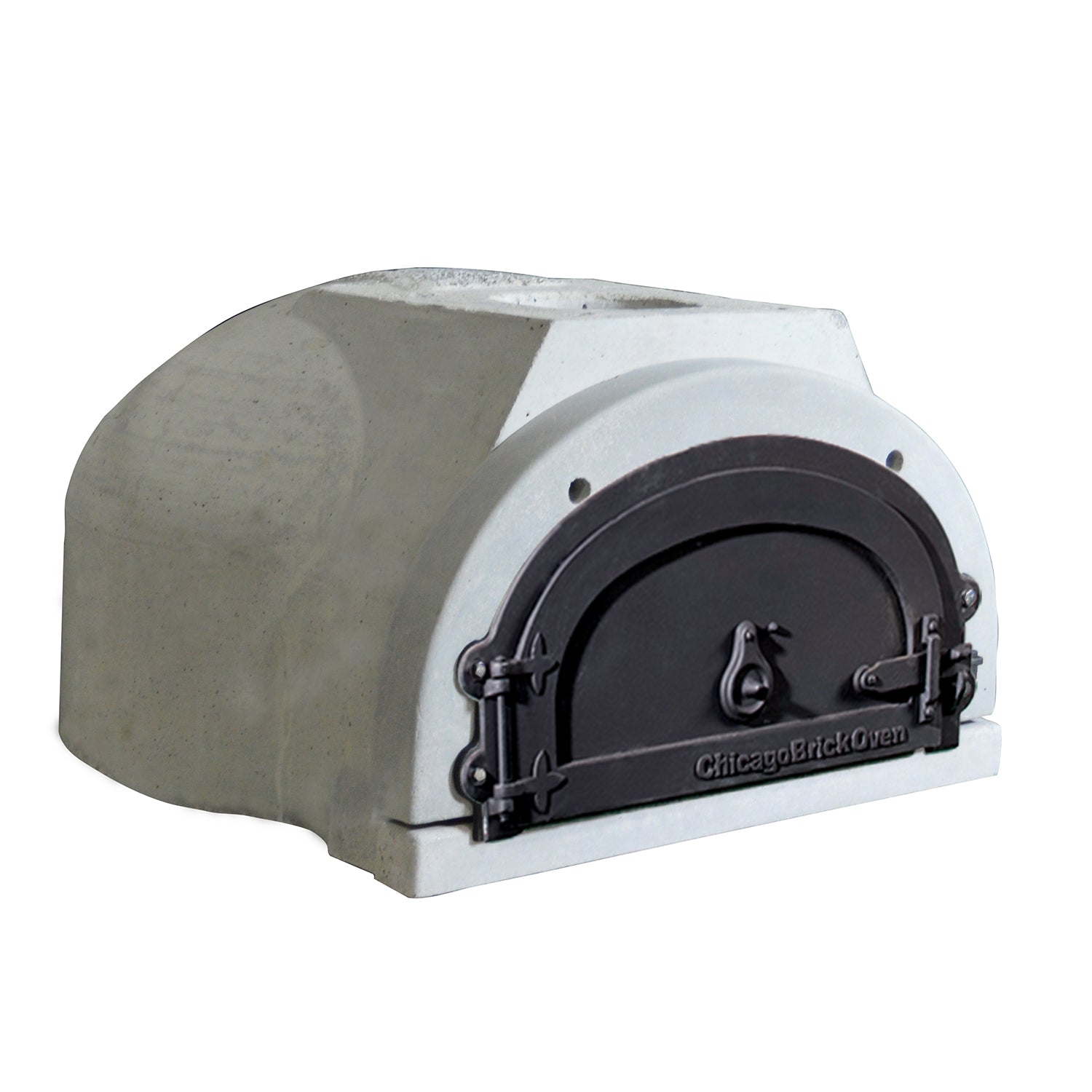
Explore this need in the finder →The CBO 500 is the smallest of Chicago Brick Oven’s three wood-fired DIY kits, but “smallest” still means a permanent masonry project rather than a portable patio oven. The native U.S. row is SKU CBO-O-KIT-500. Its cooking hearth measures 27 by 22 inches, and its doorway is 17 inches wide. The current maker diagram illustrates one 12-inch pizza on this floor; Chicago Brick Oven explicitly says its layouts are examples, not maximum capacity. That makes 12 inches a documented, conservative fit for a finder result—not a confirmed largest pie. If two pizzas at once or a larger dough round is essential, the available evidence does not establish either for this kit.
A compact hearth, with an installation project around it
The package is a five-piece oven: dome, two-piece hearth, arch and decorative door. It also lists an anchor plate, insulation board and blanket, steel plate, mortar, a pizza peel, brush and infrared thermometer gun. The manufacturer identifies the cooking tools and installation kit as included, but the supporting structure, decorative enclosure finish and installation labor are separate. Its specification sheet calls for a support base rated for at least 350 pounds. That is the base’s minimum load requirement, not the oven’s assembled weight; the sheet supplies individual component weights but no total carrying weight.
This can suit a homeowner who has a compact outdoor-kitchen plan and is prepared to coordinate hardscaping. It is a poor match for someone seeking a ready-to-use countertop appliance. The current manual says the support must be masonry or metal, level and strong, with noncombustible material around it; it calls for a professional or suitably qualified installer. Before building, use the manufacturer’s exact drawings and ask local building or fire officials about permits, restrictions and inspections. The kit does not make a custom hearth, surround, chimney routing or a code-compliant venting plan optional.
Clearance and indoor use need real planning
The wood-burning manual gives the CBO 500 and 750 the same minimum combustible clearances: 10 inches at the sides and back, 18 inches overhead and 30 inches below. It also calls for 30 inches on either side of the door opening and 36 inches in front. Keep wood storage at least 7 inches below the insulation board. These are different directional measurements, not a single universal gap; the finder uses 36 inches as a conservative summary of the largest listed distance. Follow the installation diagram, local rules and the installer’s plan rather than relying on that one number alone.
The model is presented as an outdoor kit, while the current manual discusses outdoor or indoor installation for covered CBO wood ovens. Indoor use is not a casual kitchen-placement option: the manual calls for code-compliant installation and a properly designed chimney, and its commercial indoor guidance invokes ventilation standards. The review’s indoor match means only that the manufacturer’s manual describes an indoor route; it does not substitute for a local approval, qualified installer or ventilation design. If those conditions cannot be confirmed, treat this as an outdoor project.
Wood fire, manual tending and slow curing
This exact kit is wood-fired, not the separately listed hybrid 750 and not a gas-convertible arrangement. The manual specifies solid, dry wood only and rejects scrap wood, compressed logs and coal. Its firing instructions begin with dry kindling and small additions; do not use starter fluids or build a large first fire. Before cooking, the manufacturer directs a gradual cure over two to three days near 212°F without exceeding that temperature, and recommends re-curing after an extended period unused or exposure to moisture. That preparation and the time needed to build and manage a fire are part of ownership.
For pizza, the maker’s directions use an open doorway and a live fire. The included infrared gun is a handheld way to check a surface; it is not a built-in display, food probe, automatic controller or phone monitor. The included decorative door must not be used to close the cooking chamber. The manual says closed-door cooking is for below 400°F after the fire is out, using an insulating door; that insulating door is optional on the 500 and is not listed in this package. The 500’s modest size is therefore not the same thing as an automated or low-effort routine.
Who should choose it over the larger kits?
Choose the CBO 500 when the smaller cooking floor and 350-pound minimum base rating make a planned built-in project more realistic, and one documented 12-inch pizza at a time fits the meal. The 750’s 38.25-by-28-inch hearth is illustrated with two 12-inch pizzas but needs a 480-pound minimum support base. The 1000 steps up to a 53-by-39-inch hearth and four illustrated 12-inch pizzas, but requires a 920-pound minimum base and a larger enclosure; neither diagram is a maximum-capacity promise. Move up only if the menu and footprint justify the structural demand. Move away from this family entirely if portability, propane, a settable temperature, powered turning or an off-the-shelf stand is essential.
Chicago Brick Oven’s statements about temperatures above 1,000°F and heat retention are manufacturer claims, not independent test results or an exact selectable maximum. No verified maximum pizza diameter, assembled oven weight or temperature-control range is published in the sources reviewed. Check the current instructions and exact delivery SKU before construction; a wrong opening, support or clearance assumption is expensive and difficult to undo.
Sources: Chicago Brick Oven CBO 500 DIY product page, specification-sheet index (CBO 500 DIY sheet), and the product-manuals index (current CBO 500/750/1000 wood-burning manual). Product and capacity statements are attributed manufacturer specifications; no independent performance measurements are claimed.
Key details at a glance
| Fuel versions | The exact native row is SKU CBO-O-KIT-500 and the current product page calls this a wood-fired DIY kit. Chicago Brick Oven lists the 750 Hybrid-R separately and supplies it with a separate manual; no propane or natural-gas plan is assigned to this exact row. |
|---|---|
| 12-inch pizzas at once on standard floor | 1 |
| Published standard-oven weight | 350 lb |
| Temperature hub supplied with oven | No |
| Food probes supplied with oven | 0 |
| Motorized stone supplied in base package | No |
| Monitoring and controls | The kit lists a handheld infrared thermometer gun; it is not an integrated live display, food probe, automatic controller or phone feed. |
| Optional rotating setup | The exact wood-burning kit has a fixed hearth. Manufacturer sources list no motorized turntable for this row; turning is a manual live-fire task. |
| Stone care | The current exact-family manual requires a slow initial 2-3 day cure near 212°F without exceeding it, dry solid wood only and gradual firing. Avoid starter fluids, and observe the manual’s installation, fire and hot-surface warnings. |
| Cooking modes and limits | Solid-wood live firing and manual tending; no temperature modes, named pizza presets or saved settings are listed. |
| Saved custom settings | 0 |
| Dedicated dough-proofing mode | No |
Use the exact model’s instructions for operating limits, supplied equipment and version differences.
Sources for this assessment
- Chicago Brick Oven U.S. shop-all native catalogue row
- CBO 500 DIY Brick Pizza Oven Kit | Wood Fired Pizza Oven | Flexibility Meets Affordability | 27" x 22" Cooking Surface
- Chicago Brick Oven CBO 500 DIY specification sheet
- Chicago Brick Oven official Product Manuals index
- Chicago Brick Oven current wood-burning manual, CBO-500, CBO-750 and CBO-1000, revision Ver 120225
- Chicago Brick Oven CBO 500 DIY exact-page product image

Find a setup for your pizza night.
Choose your fuel, pizza diameter and serving layout, then add turning and monitoring requirements.